Key Takeaways
- Both lasers and chemical peels treat photodamage, wrinkles, acne, and uneven skin tone but work very differently.
- Chemical peels work superficially using acids to exfoliate and rebuild collagen in the outer skin layers.
- Lasers penetrate deeper, offering more precise targeting of acne scars, spots, veins, and stubborn pigmentation.
- Chemical peels can cause post-inflammatory hyperpigmentation in darker skin tones, while lasers are safer for all tones.
- Wise Med Spa offers complimentary consultations to help patients choose the right treatment for their skin goals.
In the world of in-office skincare procedures, few treatments are as versatile and can treat as many skin concerns as lasers and peels. Both essentially have the same goal: to improve the overall appearance of your skin, and they both can treat photodamage (such as age/sun spots), wrinkles, acne while also improving the tone and texture of your skin. Yet, the two are ultimately very different. Below is a comparison of the treatments to give you a better sense of what they can do. We also offer complimentary consultations, so our expert team can help you find the best solution for you!
How do the treatments work?
A laser is a device that emits a particular wavelength of light that targets either pigment or hemoglobin in the skin. Targeting pigment helps eliminate spots (or hair or tattoos, for that matter), targeting hemoglobin reduces redness (veins, rosacea, scars, stretch marks), specific wavelengths also help with treating wrinkles. Laser treatments allow going into the deeper layers of skin and target issues (veins, acne scars, spots) more precisely.
Chemical peels work more superficially than lasers, using different acid components to remove the top layers of the skin. This chemical exfoliation promotes and rebuilds new, healthy collagen in the skin, and the new skin that is revealed will be visibly healthier and have better texture and tone.
Chemical Peels
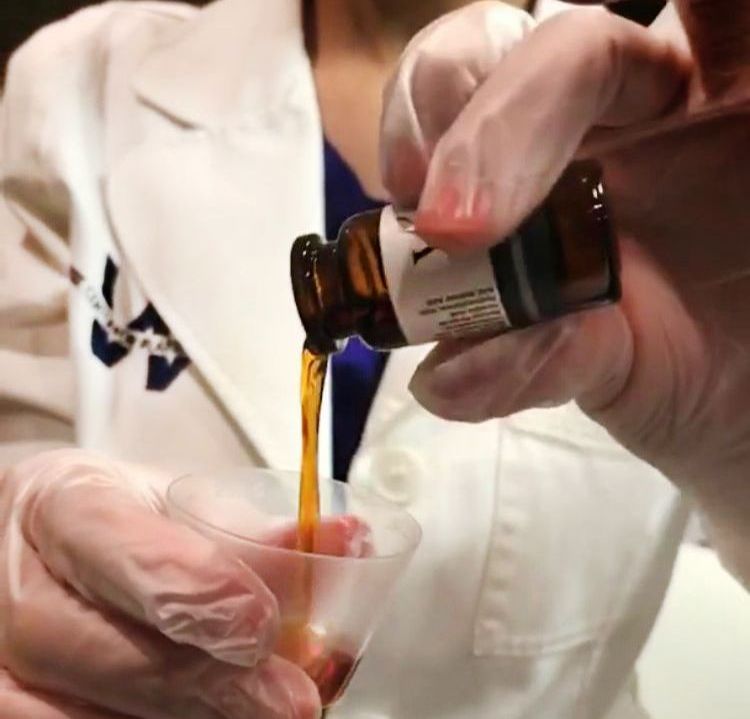
Chemical Peels are fantastic for treating superficial irregularities.
Whether you want to target active acne, melasma, pigmentation, fine lines, large pores, or dull skin, various peels can help. All skin types can benefit from chemical peels, and they’re an excellent addition to everyone’s entire skincare routine.
Downtimes for peels can vary greatly, depending on the depth of the peel. Some only cause minor flaking, whereas others can leave you swollen/pink-looking for approximately a week. Pricing for chemical peels varies as well, depending on which product is used. VI Peel, one of the most advanced pharmaceutical-grade chemical peels around. In contrast, Enlighten Depigmentation Treatment, an intensive peel that’s suited for all kinds of pigmentation, including that caused by melasma, can cost a little more. In many cases, a series of peels are needed to achieve the best results.
Chemical peels, unfortunately, don’t go deep enough into the skin to treat wrinkles, stubborn pigment, and vascular issues. They’re also not the best for targeting individual brown spots or acne scars. Lastly, certain chemical peels are too strong for darker skin tones and can cause post-inflammatory hyperpigmentation. Thus, treatment might take longer for people with darker complexions.
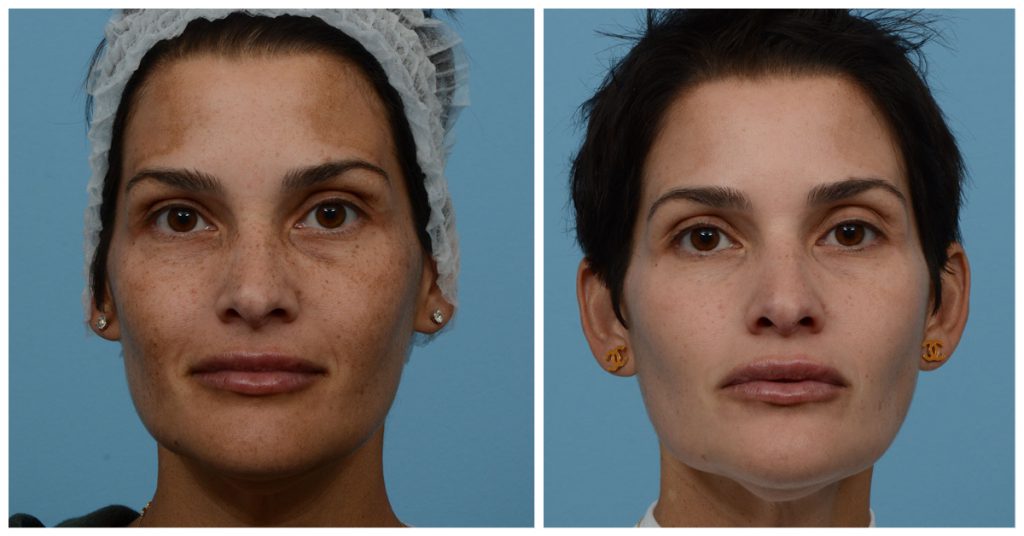 Before & after one treatment of Enlighten Depigmentation Mask
Laser Treatments
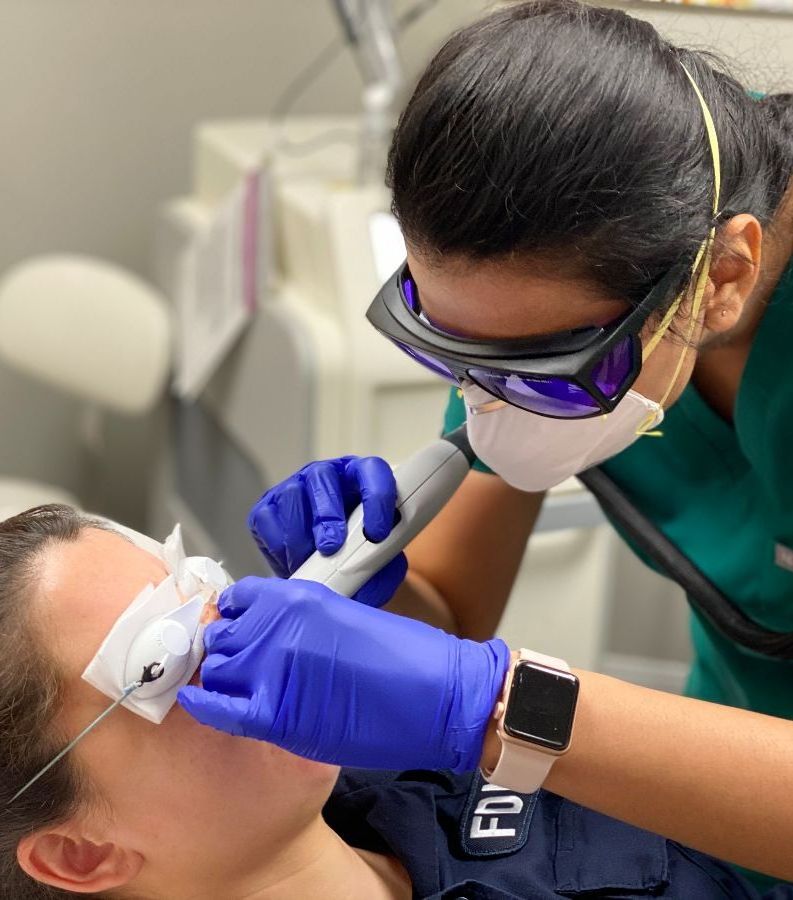
Laser treatments are superior to chemical peels in how controllable and precise they are. It’s much easier just to target an acne scar or a few spots on the skin with a laser, meaning you can leave other areas of your face alone.
Lasers are also better for more profound collagen remodeling, so if you’re trying to target moderate to deep wrinkles, lasers might be a better option.
Many patients opt for laser treatments because results can be achieved much faster than with a series of peels. Lasers can go deeper, work more intensely, and get longer-lasting (and even permanent) results. Moreover, lasers can be safely used on darker skin tones and sensitive skin. Downtime for laser treatments depends on the machine itself, as well as the patient’s skin type. Some have no downtime at all, whereas others will require a week or two of rest.
Laser treatments can target unwanted veins on the face and body, remove pigmentation and age/dark spots, resurface your skin, reduce the appearance of lines and wrinkles, remove warts, scars, unwanted tattoos and hair, and help with a variety of skin issues from rosacea to melasma and more.
Pricing per laser treatment varies. Most lasers require more than one session, and total pricing really depends on how large the treated area is, what your concerns are, as well as your skin type. Lasers are incredibly versatile in how they can help your skin achieve its optimal state. Scroll down to book a consultation to see whether one of our laser treatments can help you!
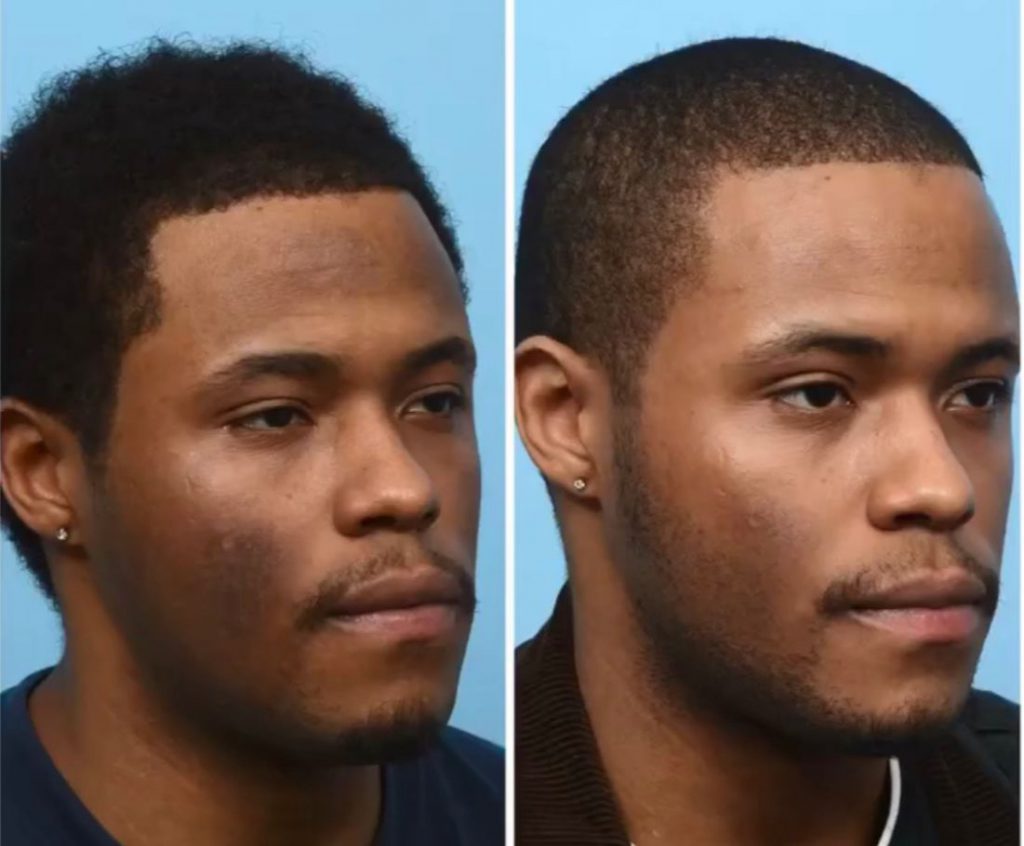 Before & after three PicoWay laser sessions
In conclusion, whether you should opt for a chemical peel or a laser treatment really depends on what you’re trying to achieve, what your timeline is like, as well as your budget. Wise Skin Squad is always happy to consult with you to get your skin on track.